
Right hemisphere and comprehension, a conversation between Adolfo García and Valeria Abusamra (in Spanish)
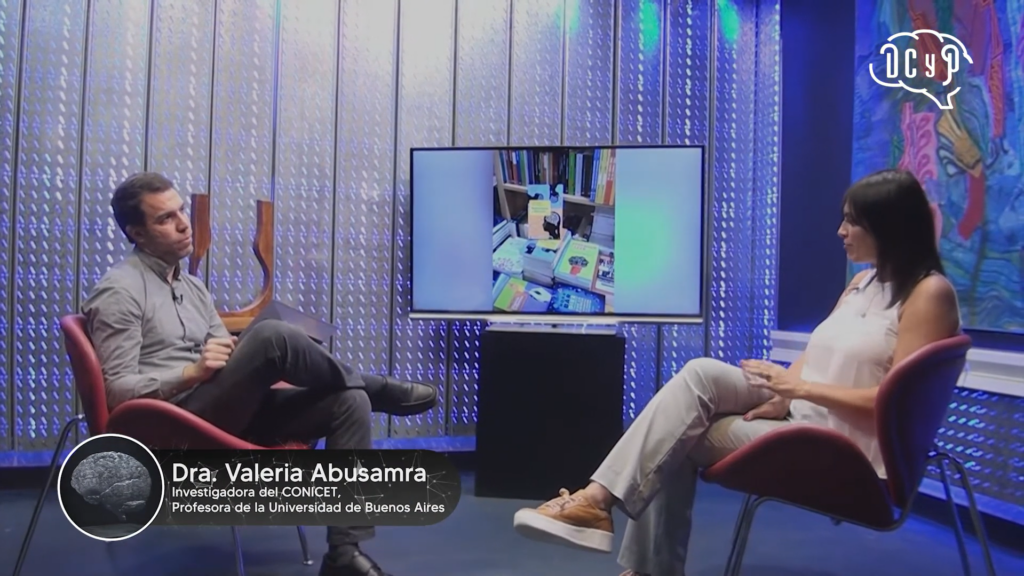
The daily use of language brings both halves of the brain into play. Psycholinguist Valeria Abusamra tells us what role each hemisphere plays during verbal communication, emphasizing the lesser-known protagonist of this story: the right hemisphere. We also discuss the neurocognitive mechanisms involved in verbal comprehension and the possible educational applications of this line of […]
Language and artificial intelligence, a conversation between Adolfo García and Guillermo Cecchi
(in Spanish)
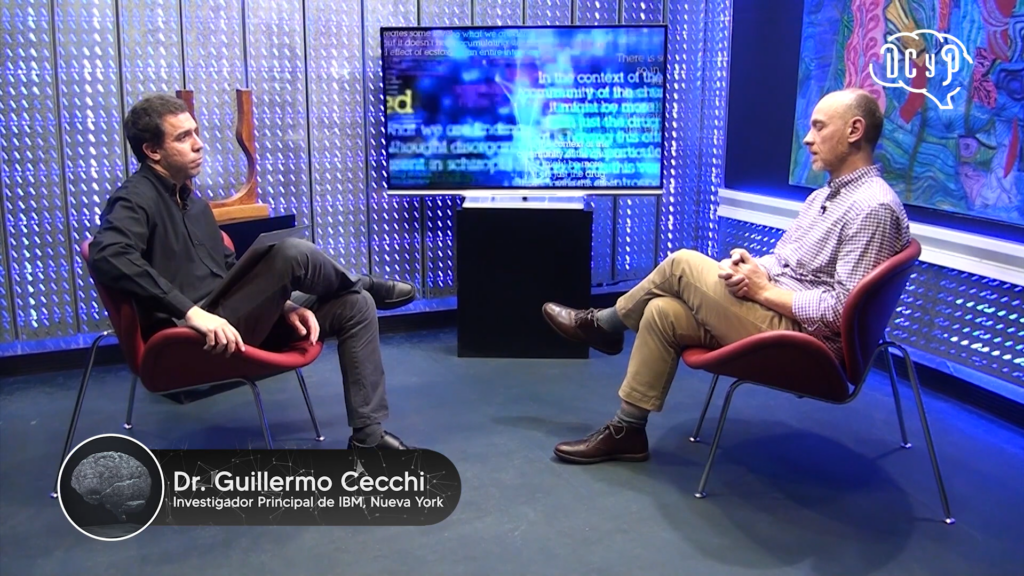
Language is a window into the organization (and disorganization) of mind. Guillermo Cecchi specializes in the use of artificial intelligence techniques to explore people’s natural speech to detect those with psychiatric or neurological conditions and assess the severity of their symptoms. His techniques even make it possible to predict which individuals will develop such disorders […]
Spontaneous language may hold clues into Alzheimer’s disease

Just as eyes are windows to the soul, so too words are windows to the mind. We can easily infer a person’s mood from the adjectives she uses, her age from her syntax, her education level from her vocabulary. Yet, it is far more difficult to detect linguistic clues into specific brain conditions, such as […]
Automated detection of people with Alzheimer’s disease (in Spanish)

Argentine and Chilean researchers develop new approach to identify semantic markers of the disease. You can read the full article, in Spanish, here. Investigadores argentinos y chilenos desarrollan nuevo abordaje para identificar marcadores semánticos de la enfermedad. Puedes leer la nota completa aquí.
Automated speech analysis in Parkinson’s disease (in Spanish)

Latin American researchers lead advances in detecting dysarthria in patients with diverse clinical profiles. You can read the full article, in Spanish, here. Investigadores latinoamericanos lideran avances para detectar disartria en pacientes con diversos perfiles clínicos. Puedes leer la nota completa aquí.
Linguistic research and brain alterations in epilepsy (in Spanish)

Contributions of Argentine scientists at the crossroads between language science, data science and translational neuroscience. You can read the full article, in Spanish, here. Aportes de científicos argentinos en el cruce entre las ciencias del lenguaje, la ciencia de datos y la neurociencia traslacional. Puedes leer la nota completa aquí.
No, no, no! How the brain processes negation

Atlantic Fellows Adolfo García and Agustín Ibáñez—along with Mariano Díaz-Rivera and Agustina Birba—share findings from new research about the use of negative language, associated brain activities, and implications for people living with dementia. You can read the full article here.
Discourse and the brain: towards a naturalistic neurolinguistics
(in Spanish)
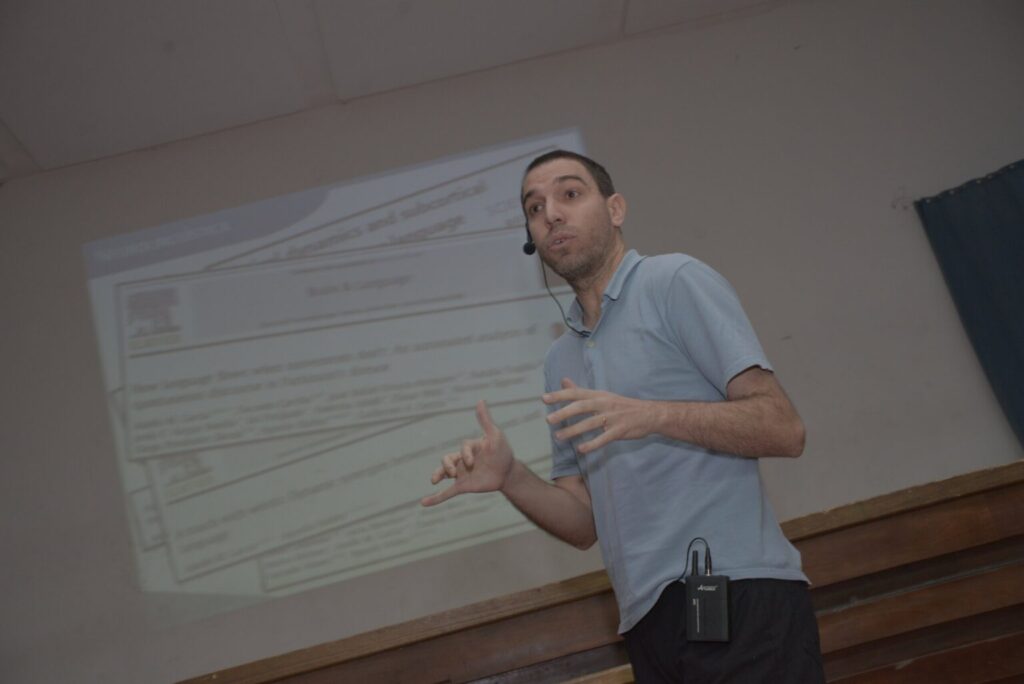
We use language constantly throughout the day, producing and understanding conversations, stories, descriptions and monologues of various kinds (i.e., context-rich, cohesive and coherent texts). However, if we take a hundred random papers in the field of neurolinguistics, we will see that most -or even all- of them use isolated, decontextualized, randomly sequenced word tasks. Why […]
Experimental automated system identifies Parkinson’s disease in 45 seconds with 80% accuracy
(in Spanish)

It has been established that the brain networks affected in this disorder, characterized by tremors, slowness and rigidity, not only play a crucial role in movement, but also in cognitive functions, particularly in language. You can read the full article, in Spanish, here. Hoy se sabe que las redes cerebrales que se afectan en este […]
Language as a window into Parkinson’s disease

Estela, Klaus, and Miloslav are elderly adults from the outskirts of Medellín, Berlin, and Prague, respectively. Along with more than six million people, they suffer from Parkinson’s disease, a brain disorder that progressively disrupts specific brain networks and causes problems with movement—such as shaking, stiffness, and difficulty with walking—as well as varied cognitive symptoms, such […]