
An Argentine app that can detect Parkinson’s and Alzheimer’s in minutes is now being used in 16 countries (in Spanish)
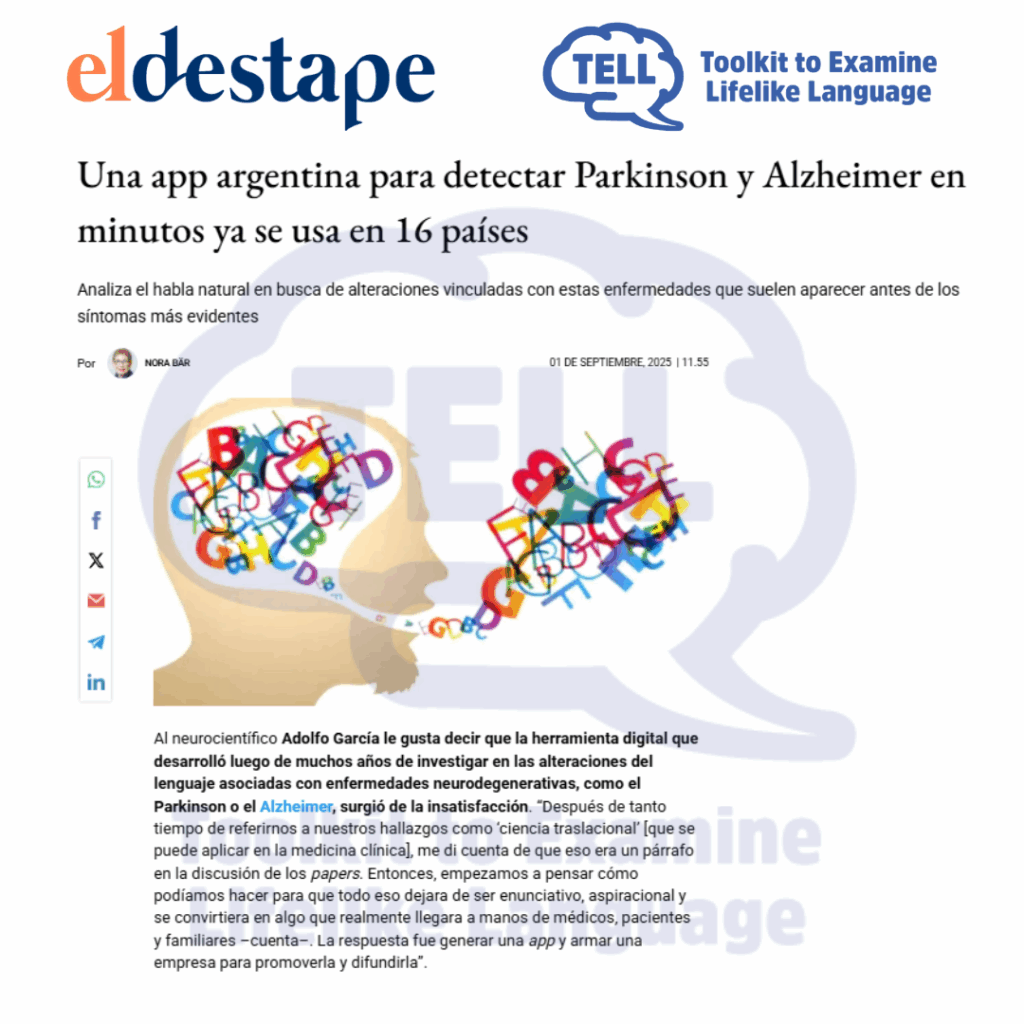
Neuroscientist Adolfo García likes to say that the digital tool he developed after many years of researching language disorders associated with neurodegenerative diseases such as Parkinson’s or Alzheimer’s arose from dissatisfaction. «After so long referring to our findings as ‘translational science’ [that can be applied in clinical medicine], I realized that this was just a […]
Talk at the 21st Argentine Congress of Gerontology and Geriatrics

Our CSO, Dr. Adolfo García, offered a presentation on the uses of TELL to detect pathological aging, at the 21st Argentine Congress of Gerontology and Geriatrics in Mar del Plata, Argentina.
Runner-Up Presentation Award at TSD 2025
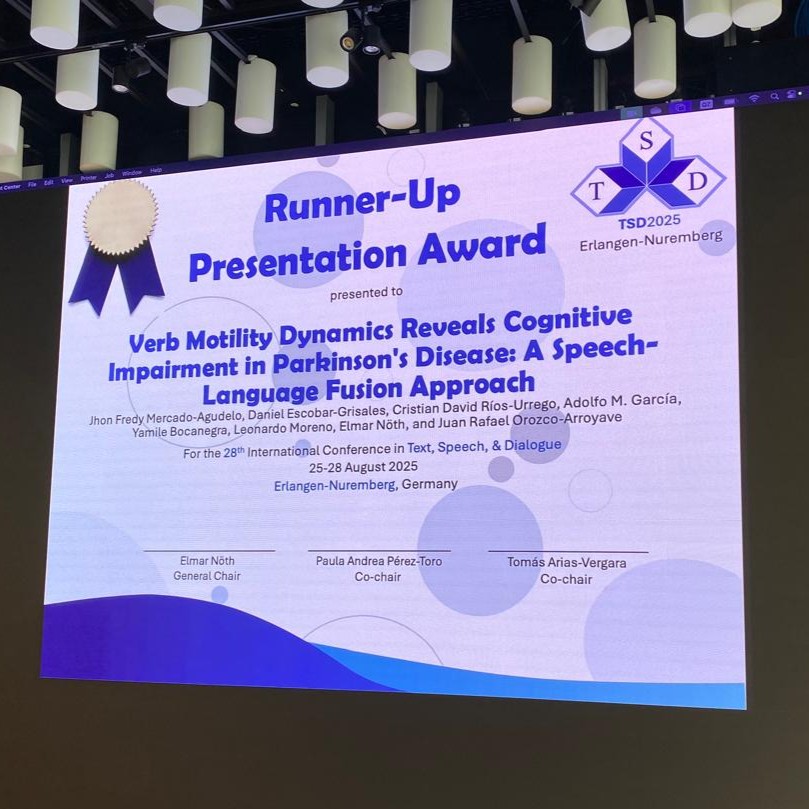
Our speech-language approach for capturing cognitive decline in Parkinson’s earned a Best Presentation Award at Text, Speech and Dialogue Conference 2025 in Erlangen. Congrats to the whole team!
TELL among the winners of the Legado 2025 contest!

TELL was among the winners of the Legado 2025 contest, organized by Bayer Foundation, Bayer, and Endeavor to find disruptive solutions for pressing global health challenges. For more details, click here.
Jeremías Inchauspe

Jeremías Inchauspe has a Bachelor’s degree in Psychology and a passion for language technologies. He is particularly interested in Natural Language Processing and Large Language Models, exploring how they can uncover meaningful patterns in speech and text. He is a doctoral researcher at the Centro de Neurociencias Cognitivas (UdeSA), where he develops text-based biomarkers for […]
Addressing Alzheimer’s: speech and smell tests may help to detect cognitive decline

Digital tests based on speech and smell are being developed to screen for cognitive decline, researchers told the Alzheimer’s Association International Conference in Toronto. Two speech apps are already some way down the road, testing several markers including speech speed, vocabulary and rhythm in different languages to establish a baseline for testing, a session convened […]
One of our studies, highlighted in Le Scienze

Our study on natural language processing markers of Italian speakers with Parkinson’s disease was highlighted in Le Scienze, the Italian edition of Scientific American. You can read the full article, in Italian, here.
Giving Kenya a voice: Digital speech biomarkers for brain health equity
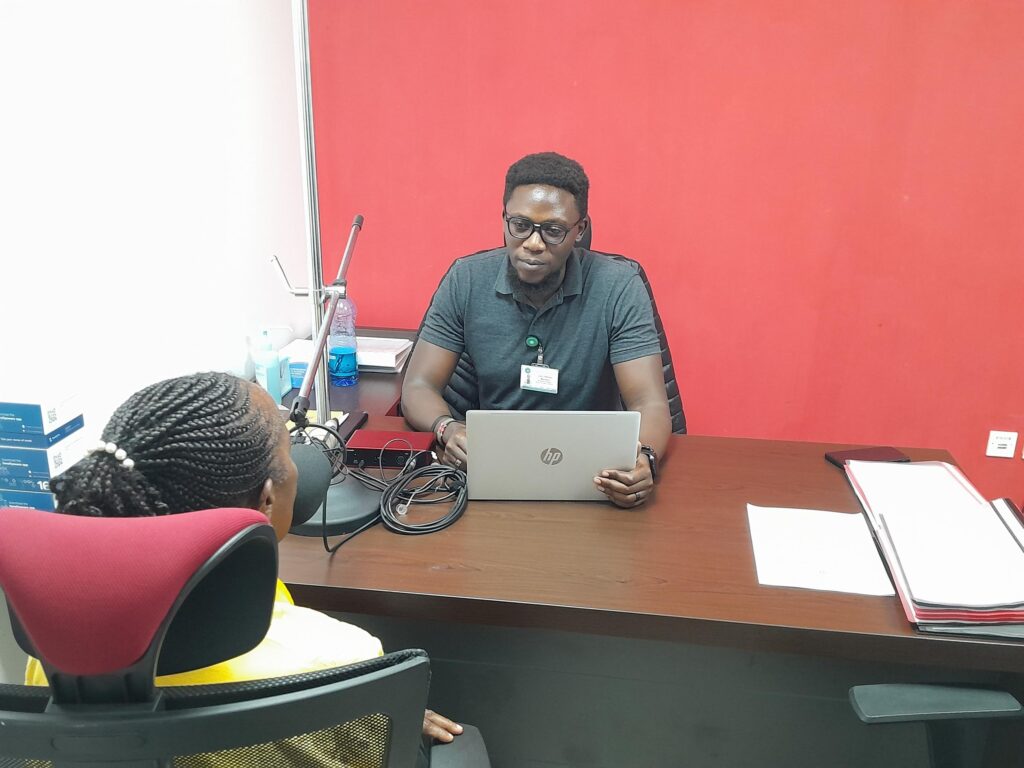
Atlantic Fellows Adolfo Garcia and Chi‑Udeh‑Momoh—along with Fernando Johann, Vaibhav Narayan, Irene B. Meier, and Karen Blackmon—explore how digital speech biomarkers can advance brain health equity through innovative work in Kenya. You can read the full article here.
Detecting Parkinson’s disease through everyday handwriting (in Spanish)

Parkinson’s disease, the second most common neurodegenerative disorder worldwide, affects the central nervous system and progressively impairs motor control. Its characteristic symptoms include muscle stiffness, resting tremors, postural instability, and slowness of movement, which affects activities that require coordination, such as handwriting. This often presents specific alterations, including micrographia—an abnormal reduction in letter size—and dysgraphia—difficulties […]
We were featured on the Neurostartups podcast!
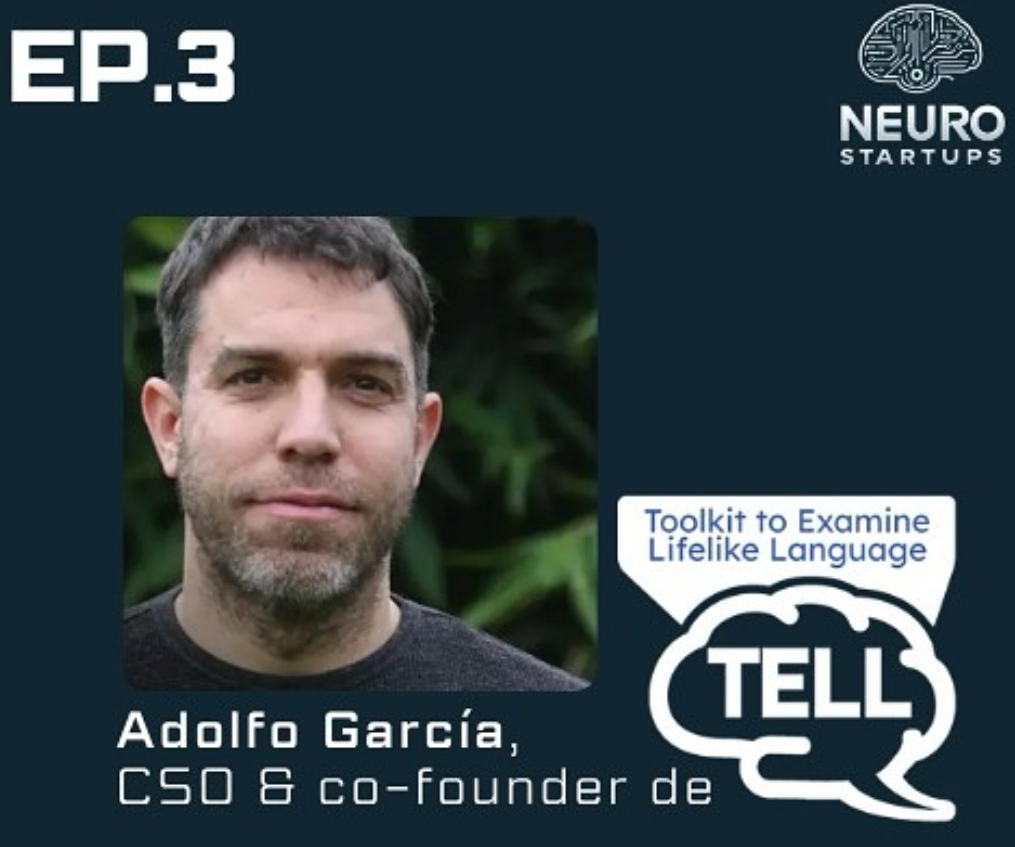
Our CSO, Dr. Adolfo García, was invited to the NeuroStartups podcast, by Neurotransmitiendo, to talk about TELL. To listen to the full episode, click here.