
TELL: An app to evaluate speech in the service of brain health (in Spanish)

By 2050, over 150 million people will be diagnosed neurodegenerative disorders, mainly including Alzheimer’s disease, Parkinson’s disease, and frontotemporal dementia. This scenario has spurred a quest for objective, affordable, scalable markers to improve early detection and symptom monitoring. Prominent among these efforts is automated speech and language analysis (ASLA), with several papers demonstrating its potential […]
Argentine researchers developed an app to detect neurodegenerative diseases (in Spanish)
Long before magnetic resonance imaging, positron emission tomography and other brain images allowed us to glimpse what is going on inside our skull without drilling into it, human beings had another invaluable resource: words. Words can not only «implant» themselves into the brain and transform it, but also tell us how it is functioning. You […]
Language in (almost all) the brain (in Spanish)

All animals have developed mechanisms which allow them to communicate with their own kind. Birds use songs that attract mates; primates use vocalizations that warn of threats; dolphins use whistles that allow them to identify their conspecifics… These systems present different levels of complexity, but, as far as we can guess, none comes close to […]
Include Network: For global equity in language-based brain health research

Atlantic Fellows for Equity in Brain Health Adolfo Garcia and Boon Lead Tee; UCSF neurologist Jessica de Leon; and GBHI faculty member Marilu Gorno-Tempini discuss the launch of Include, a new initiative focused on global equity in language-based brain health research. You can read the full article here.
Worldwide TED Talk release
(in Spanish)
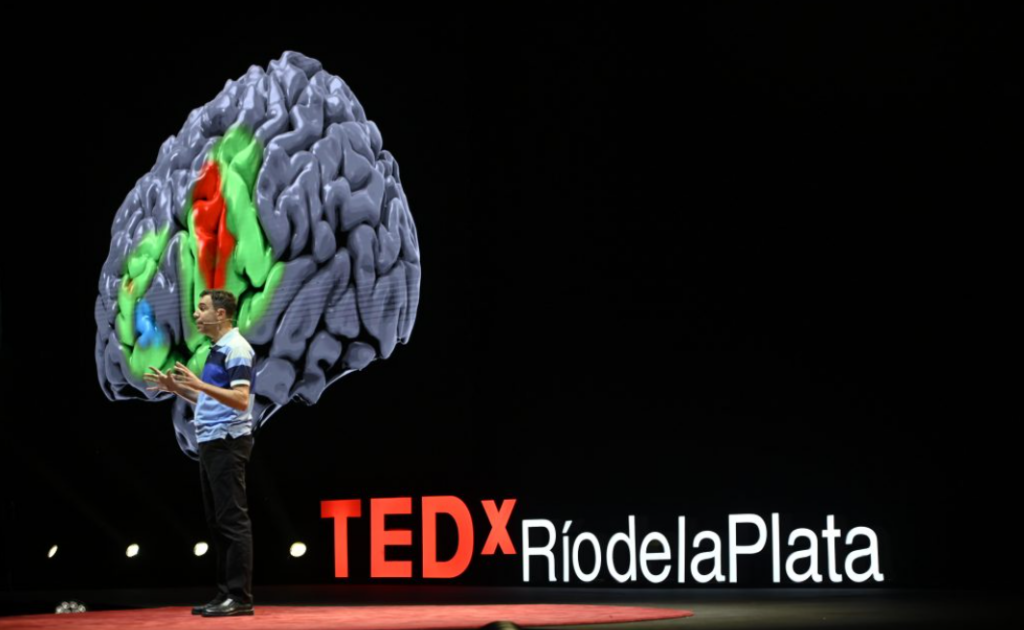
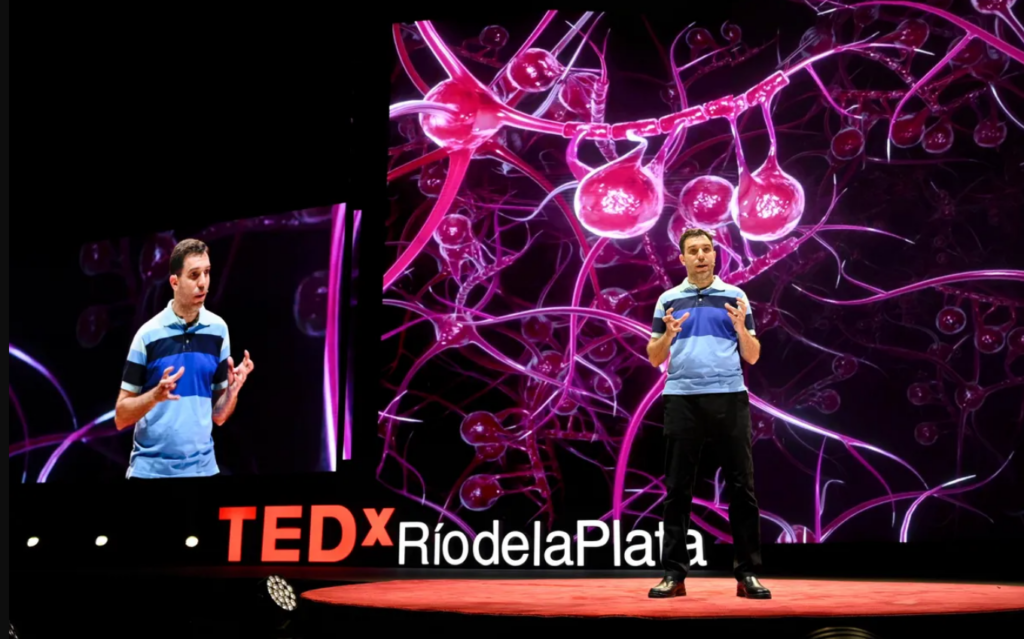
Dr. Adolfo García gave a talk on the brain and body weft of language at TEDxRíodelaPlata, in front of 12,000 people. You can watch the full talk, in Spanish, here. El Dr. Adolfo García brindó una charla sobre la trama cerebral y corporal del lenguaje en TEDxRíodelaPlata, frente a 12.000 personas. Puedes ver la […]
A global network for linguistic research on brain health
(in Spanish)
Language offers privileged insights into brain health. For example, we have seen that specific linguistic alterations contribute to the detection and characterization of Alzheimer’s disease dementia, Parkinson’s disease, and epilepsy. Recently, the clinical potential of language analysis has been bolstered by computerized tools, which reveal subtle markers of these diseases in natural discourse via objective, […]
Include kick-off meeting

Terrific kick-off meeting for INCLUDE! Leading researchers from 30+ countries joined to start groundbreaking crosslinguistic studies on brain health. Lots of exciting work ahead! You can access the Include website here.
Alzheimer’s and Parkinson’s: how language can help detect early cues
(in Spanish)
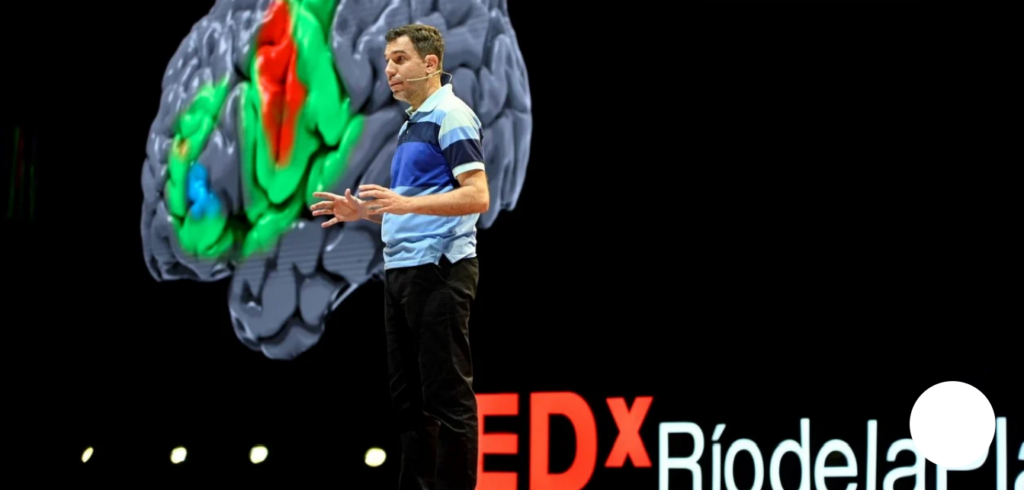
«How can the studies of the relationship between language, brain, and body help prevent cognitive diseases?», could be the question that serves as a trigger to understand what neuroscientist Adolfo Garcia wants to communicate. You can read the full article, in Spanish, here. «¿Cómo pueden los estudios de la relación entre lenguaje, cerebro y […]
Launching of the Include network
Drs. Adolfo M. Garcia, Boon Lead Tee, Jessica de Leon, and Maria Luisa Gorno-Tempini have launched the Include network for crosslinguistic research on brain health across multiple countries worldwide. This network, of international scope, has the initial support of the Global Brain Health Institute, the Alzheimer’s Association and the Alzheimer’s Society. You can access the […]
Neuroscience. The language game is not only played in the brain
(in Spanish)
The world of Adolfo García, a specialist in the neuroscience of language and communication, is governed by studies, research, hypotheses and results. His goal is to understand how speech and body movements go hand in hand and complement each other. Two aspects of life that are taken for granted, and yet hide secrets. You can […]